Buying Guides
How to Check TWS Earbuds Quality Before a Bulk Order: Battery, Pairing and Drop Test
How to verify TWS earbuds before a bulk order: test real battery life against the spec sheet, check pairing and controls, and run a drop test, so the batch plays as long as the sample promised.
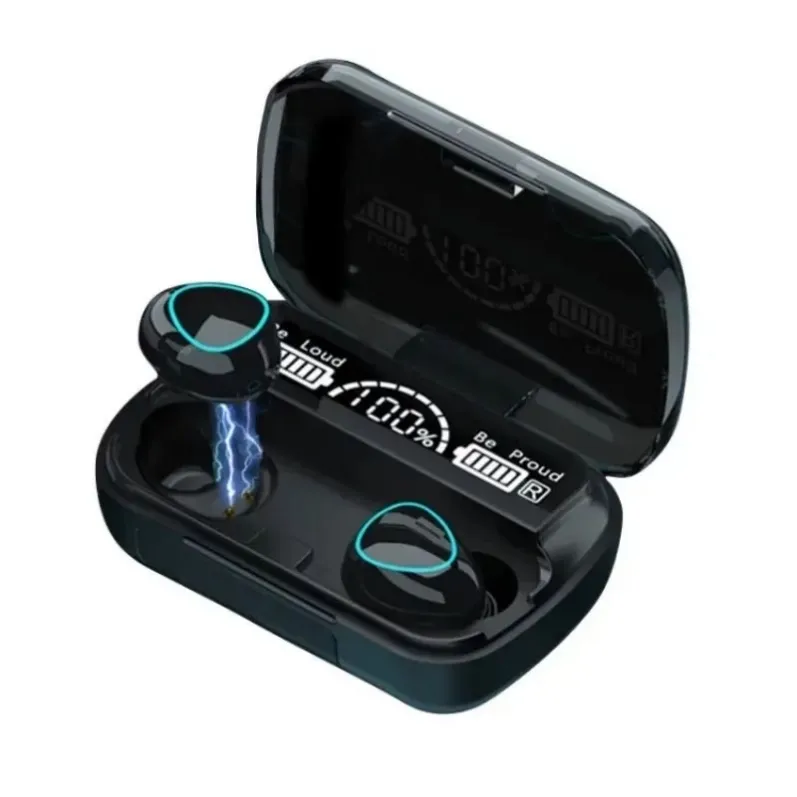
A TWS earbud looks simple: two buds, one case, no wires. That simplicity is exactly why bulk orders go wrong. The three things buyers complain about most — short battery life, pairing that drops one side, and earbuds that crack on the first fall — are all invisible in a product photo and in a one-minute sample test. They show up after the order is paid, when your customers start returning units.
The fix is not to trust the spec sheet harder. It is to test the sample the way your customers will use it, and to write the results into the order before you pay the balance.
1. Battery: Test Playtime, Not the Number on the Sheet
Battery capacity is the most overstated number on a TWS spec sheet. The figure is usually measured in the factory's best case: medium volume, a single codec, a fresh cell, no calls, no ANC. Your customers will use the earbuds louder, with calls, on a different phone — and the real number is always lower. The question is how much lower, and whether the gap is honest or a warning sign.
Run a real playtime test on the sample. Charge the earbuds and case fully, pair them to a phone, set the volume to about 70%, and play music continuously until one side stops. Note the time per side — a large gap between left and right means one cell is weaker than the other, a batch-quality signal, not a one-off. Then recharge from the case and repeat: a case that cannot deliver the stated number of recharges has a smaller or degraded cell.
Ask for the cell specification, not just the headline hours. A supplier that can state the earbud cell capacity, the case cell capacity, and the test conditions (volume, codec, temperature) has actually measured its product. One that can only repeat the headline playtime number has not. For reference, our TWS-M10 wireless earbuds list 50 mAh earbud cells and a 2,000 mAh case — ask your supplier for the same three figures and compare them against your own test.
Check the charging case as a product, not an accessory. Test the lid hinge, the magnetic hold, the charging contacts and the indicator light. A case that charges one side slowly, or only when the lid is pressed down, will generate returns long after the earbuds themselves have been forgotten. And check standby drain: leave a fully charged case untouched for 48 hours and see how much charge it still holds.
A 10–20% gap between spec-sheet playtime and your test is normal. A gap of 40% or more, or a left-right imbalance, is a reason to ask what cell is actually inside the earbud — and to hold the order until the answer is in writing.
2. Pairing: Test It the Way a First-Time Buyer Will
Pairing failures are the most returned-for TWS fault, and the most preventable. The sample paired instantly on the factory's test phone; your customer will pair it on a different phone, after a firmware update, with another device already connected. Test for that reality, not the demo.
- Pair from scratch, several times. Forget the device, reset the earbuds, and pair again — at least three times. Note how long it takes, whether both sides connect every time, and whether the pairing name matches the agreed custom name.
- Test both sides independently. Play audio with only the left earbud in the case and only the right out, then swap. Each side should work alone, and the sound should switch cleanly. A unit where one side will not play solo is a unit that will be returned.
- Test the controls and the microphone. Press every touch or button control — play/pause, next track, answer/end call — on both sides. Make a real test call in a normal room: echo or dropouts mean a mic problem no spec sheet will mention.
- Test the reconnect. Turn the phone's Bluetooth off and on, walk out of range and back, and open the case after the phone has been idle. The earbuds should reconnect without the user opening the phone's settings. A pair that needs manual reconnection every morning is a pair that gets returned.
- Check the Bluetooth version against your market. Bluetooth 5.3 is the current mainstream for resale stock; older 5.0/5.1 chips are still sold as "new" and cause compatibility complaints. Ask the supplier to state the chip version in the order confirmation, not just in a chat message.
If any of these tests fails on the sample, do not assume the bulk will be better. Pairing and control faults come from the chip, firmware and assembly process — all batch-level factors. A failed sample test is a failed supplier test.
3. Drop Test: The Check Nobody Does Until It Is Too Late
A TWS earbud lives in pockets, bags and gym floors. One that survives a desk but fails a pocket-height fall will generate cracked cases and broken hinges — the kind of damage customers photograph and post.
Do a simple, repeatable drop test on the sample. Drop each earbud and the closed case from pocket height (about 1 metre) onto a hard floor, three times each, and check after every drop: does it still power on and pair, does the lid still close and hold, is the shell cracked or the hinge loose? This is the minimum a product will face in its first week with a customer.
Inspect the shell and joints. Look at the seam where the two halves of each earbud meet, and at the charging contacts. Gaps, uneven seams or glue residue are signs of rushed assembly — and rushed assembly is what makes one batch good and the next batch fragile. Any visible difference from the sealed golden sample in shell finish or fit is a question to raise before production, not after delivery.
Tie the result to the order. Agree in writing what "pass" means — for example, a stated playtime floor rather than a headline number, pairing that succeeds on a named test phone, and no functional failure after the drop test. Buyer guides commonly cite AQL 1.0–2.5 for major defects and 2.5–4.0 for minor defects; agree the levels and the remedy (rework, re-inspection or replacement) before production, so a failed check is a decision, not an argument. Our factory quality control page documents how we run these checks on every order — function, sound and packaging — before shipment.
The One-Line Version
Charge them, play them at real volume, pair them from scratch on a real phone, drop them from pocket height, and compare every result with the spec sheet in writing. If the sample survives that test, the bulk order has a fair chance of surviving your customers. If any of them fails, the cheapest fix is the one you make before you pay.
If you are preparing a TWS order and want these checks applied to your models, contact us or ask about custom logo and pairing-name options — standard samples take 5–7 days, non-custom bulk orders 3–7 days, and standard models start from a 1 pc MOQ.
Get a Quote — contact us today, or reach us on WhatsApp at +86 135 3021 9863. HOEXI is rated 4.9/5 on Alibaba.