Buying Guides
Pre-Shipment Inspection Checklist for Earbuds: Function, Sound and Packaging
A practical pre-shipment inspection checklist for earbud buyers — what to test on function, sound and packaging before the balance is paid, so a good sample never turns into a bad bulk order.

A sample that sounds perfect proves one thing: the factory can make a good earbud. It does not prove that the 1,000 units in the carton are the same earbud. Drivers get swapped for cheaper ones, cables get shortened, ear tips get changed, and the printed box suddenly uses thinner card. None of this shows up in a photo. It shows up when your customer opens the parcel.
That is why experienced buyers never pay the balance on trust alone. They run a pre-shipment inspection — a structured check of a random sample from the finished, packed goods, against the sealed golden sample — before the goods leave the factory. Here is the checklist, in the three areas where earbud orders most often go wrong: function, sound and packaging.
1. Start With the Golden Sample, Not the Carton
Before anyone opens a box, agree on the reference point. A golden sample is a unit both sides seal and sign before mass production — one copy stays with the buyer, one with the factory. Every inspection decision after that is a comparison: does this unit match the sealed sample, or not?
Ask the factory to confirm three things in writing before inspection day: the sealed sample is on the bench for side-by-side comparison; the goods are finished and packed (at least 80% packed is the usual threshold, so the pull is truly representative); and the inspection covers a random pull across cartons, not units the factory pre-selected. If only the top carton is opened, the check proves nothing.
If a supplier resists a golden sample or a random pull, treat that as information. Suppliers that welcome a defined inspection standard are the ones you can trust with a repeat order.
2. Function: Test Every Feature the Buyer Will Touch
Function failures are the most expensive kind, because they are discovered by the end customer, not by you. Work through the list on each sampled unit, and test both earbuds — a fault on the left side only is still a fault.
- Sound on both sides: play audio through each earbud separately. Check for one side silent, one side quieter, crackling, or cutting out when the cable or earbud is moved gently.
- Microphone and remote (if specified): make a test call and press every remote button — volume, play/pause, answer/end. A remote that works on the sample and fails on 5% of bulk units is a returns problem, not a minor defect.
- Connector fit: plug the earbud into the phones on your compatibility list. For Type-C models, confirm the DAC version matches the order — an analog Type-C plug in a phone that needs a DAC chip simply will not play, and this is one of the most common bulk-order mismatches. Check the plug seats firmly and does not wobble.
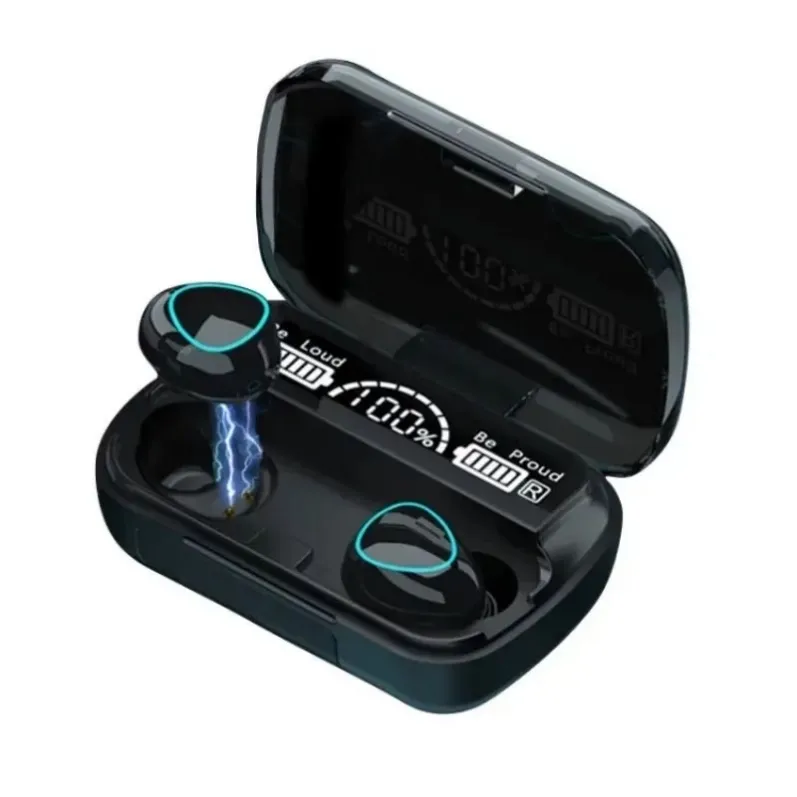
- Bluetooth pairing (TWS models): pair each sampled unit from scratch, check the pairing name, confirm both earbuds connect, and confirm the case charges them. Test the case lid, the charging contacts and the indicator light.
- Cable and fit: flex the cable gently at the plug and at the earbud joint — look for exposed wire or loose joints, and pull with light, steady force; it should hold. Check ear tips are the specified size and material and sit firmly; for half in-ear models with no tips, check the shape matches the sample exactly. Record results per unit: "3 of 20 units had a dead left earbud" is a decision; "some had problems" is not.
3. Sound: Compare, Don't Just Listen
Sound is subjective, but a bulk inspection can still catch the faults that matter — you are not judging audiophile quality, you are checking that the bulk units sound like the sample you approved.
- A/B against the golden sample: play the same track, at the same volume, through the sample and then through the inspected unit. Listen for a clear difference in volume, bass or clarity. If a unit sounds noticeably thinner or harsher than the sample, flag it.
- Noise and distortion: at normal volume there should be no hiss, buzz or rattle. Raise the volume briefly — distortion that appears early often means a different, cheaper driver was used. If the factory runs acoustic testing, ask for the batch test summary and check it against the sample's readings.
One unit sounding different could be a one-off. Several units drifting in the same direction is a batch problem — stop the shipment and ask what changed.
4. Packaging: The Part Buyers Judge First
Packaging defects do not affect sound, but they cause returns and bad reviews all the same — especially for sellers shipping directly to consumers.
- Box and print: compare the printed box with the approved artwork — logo position, colours, spelling, barcode and any certification marks. Check card thickness and finish against the sample; thinner card and faded print are classic silent downgrades.
- What's inside: open the box and count every item against the packing list — earbuds, ear tips (all specified sizes), cable, manual, warranty card. A missing ear-tip size is a common shortfall.
- Carton and quantity: count units per carton and cartons per shipment against the order, and check the model name, quantity and custom logo on the box and carton label. Check carton labels, gross weight and that cartons are sealed and dry. A short count found after payment is far harder to fix than one found on inspection day.
5. Defects: Decide the Pass Line Before You Inspect
An inspection without a pass line becomes an argument. Agree the standard before production: AQL levels (buyer guides commonly cite AQL 1.0–2.5 for major defects and 2.5–4.0 for minor defects on consumer electronics); defect classes — critical (total failure, e.g. a dead earbud), major (a feature that does not work, e.g. mic failure), minor (a cosmetic scuff); and what happens on failure — rework, re-inspection, or replacement — stated before the goods are made. Keep the report: a dated inspection report with photos of each failed unit makes a rework request simple and a dispute short.
6. How to Run This With Your Factory
You do not need to fly to China. Most buyers inspect on a factory visit, send a third-party inspection company, or ask the factory to run the checklist with photo and video evidence per sampled unit. Send the checklist in advance and ask for the report before the balance is due — an inspection after payment has no leverage. Ask any supplier: do they keep a sealed golden sample, run function and sound checks on the line, and can they show a past inspection report? At HOEXI, every order is checked against the approved sample before shipment — function, sound and packaging — as documented on our factory quality control page.
The checklist works for any earbud type, but the details change by model: a TWS pair like the TWS-M10 wireless earbuds needs pairing and case-charging checks, while a Type-C wired model like the EM-F4C needs its DAC version and phone compatibility verified unit by unit.
The One-Line Version
Seal a golden sample. Pull randomly from packed cartons. Test function on both sides, compare sound with the sample, check every item in the box, and judge the result against an AQL line agreed before production. Do that, and the bulk order that arrives is the product you approved — not a cheaper lookalike.
If you are preparing an order and want this checklist applied to your models, contact us or ask about custom logo and packaging options — standard samples take 5–7 days, non-custom bulk orders 3–7 days, and standard models start from a 1 pc MOQ.
Get a Quote — contact us today, or reach us on WhatsApp at +86 135 3021 9863. HOEXI is rated 4.9/5 on Alibaba.