Buying Guides
Why Mirror Earphones Peel After a Month — and How to Check Plating Quality Before a Bulk Order
A buyer's guide to why cheap mirror earphones peel within a month, and the five sample checks — adhesion, rub, sweat and light — that prove the plating will last before you order in bulk.
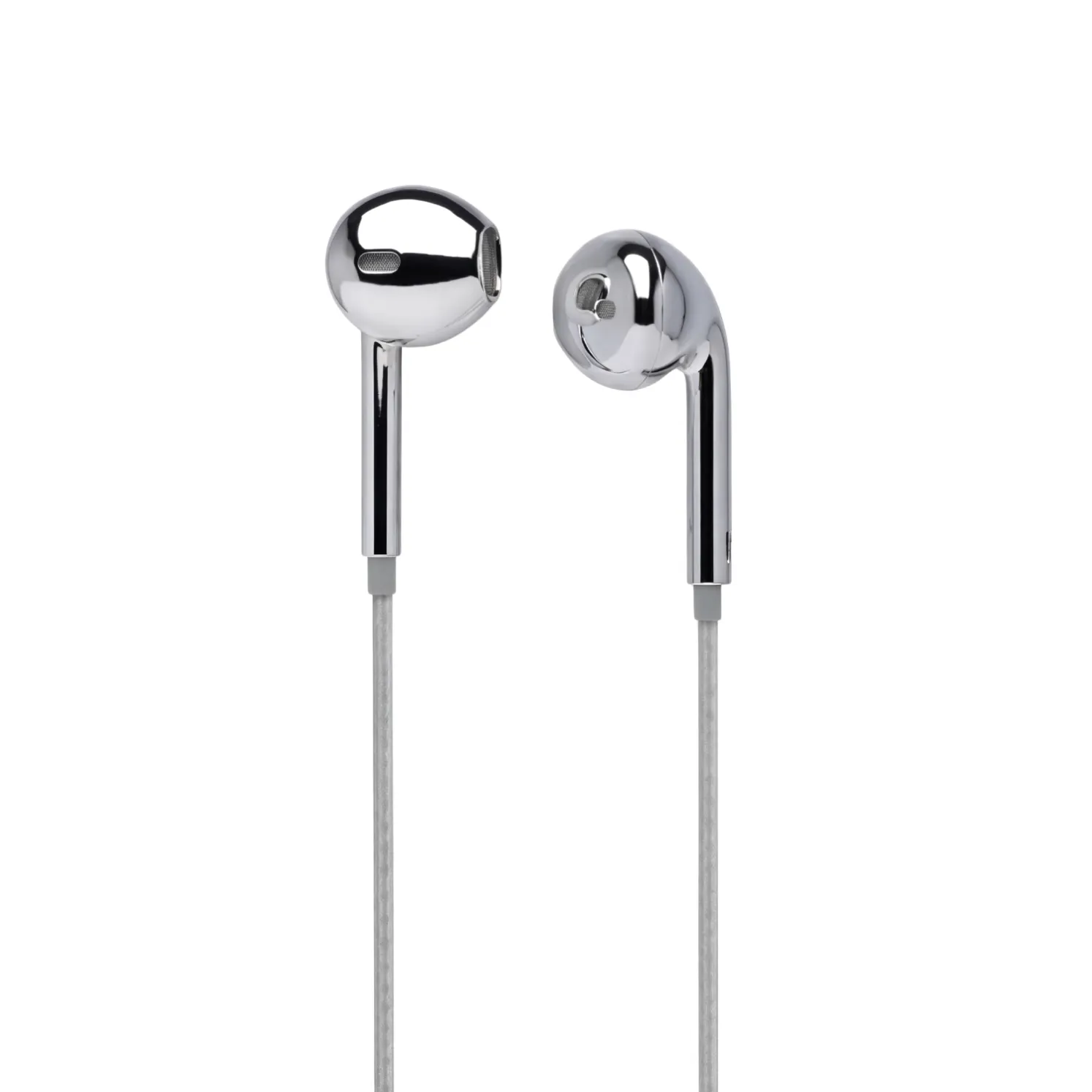
A mirror-finish earphone sells itself in a photo. The chrome-like shell catches the light, looks far more expensive than it is, and moves fast on TikTok and in phone-accessory shops. Then, about a month after your customers start wearing it, the complaints begin: tiny flakes lifting off the shell, dull patches where the mirror shine used to be, a housing that looks scratched and second-hand before the cable has even had time to wear.
The peeling is not bad luck and it is not your customers' fault. It is a plating decision the factory made before the order was placed — and it is one of the few quality problems you can actually catch on a sample, if you know what to test. This guide explains why mirror plating fails, what to ask the factory before you order, and the five checks to run on the sample so the batch you pay for keeps its finish.
1. Why Mirror Plating Peels — and Why the Sample Often Looks Fine
A metal earphone shell gets its mirror finish from electroplating: thin layers of metal deposited onto the housing, usually a base coat, then a bright layer, then a protective top coat. When every layer is done properly, the finish is hard, smooth and durable. When any step is skipped or thinned to save cost, the finish looks identical on day one — and fails in weeks.
The most common shortcut is a plating layer that is too thin. A proper mirror finish needs enough thickness to resist daily friction: keys in a pocket, the earbud rubbing against its own cable, the shell pressed against skin for hours. Thin plating wears through at the high points first — the rim of the housing, the edge of the faceplate — and once the top layer breaks, the layers underneath lift in flakes.
The second shortcut is a skipped or weak base coat. Plating does not stick to bare metal by itself; it needs a prepared surface and a bonding layer. A factory that rushes surface preparation — poor cleaning, no proper activation, a base coat applied too thin — produces a shell where the mirror layer is sitting on the surface rather than bonded to it. It passes a visual check easily. It fails the first time sweat, skin oil or pocket friction works its way under an edge.
The third cause is the finish itself. Not all "mirror" is the same process. Vacuum coating, spray chrome and electroplating can all look mirror-bright in a product photo, but they differ sharply in hardness and adhesion. A buyer who orders "mirror finish" without specifying the process can receive a batch plated by a cheaper method that was never going to survive daily wear — and the sample, handled gently for a few days, will not reveal the difference.
That is why the sample can look perfect and the bulk order can still fail. The sample is new, clean and barely handled. Your customers wear earphones for hours a day, in heat, sweat and pockets. The test that matters is the one that simulates that use — and you should run it before the bulk order, not after the first returns.
2. What to Ask the Factory Before You Order
Before you pay for a sample, ask four questions. A supplier that answers all four in writing has a plating process; a supplier that dodges them is telling you the finish is whatever the cheapest line produced that week.
What plating process is used, and how thick is the layer? Ask for the process by name — electroplating with a stated base and top coat — and for the plating thickness. You do not need to be a chemist to use the answer: what matters is that the factory can state it at all, and that the same answer appears in the order confirmation. If the thickness is only ever described as "good quality" or "mirror bright", there is no specification to hold anyone to.
Is there a protective top coat, and what is it? A clear protective coat over the mirror layer is what stands between the finish and sweat, cosmetics and friction. Ask whether one is applied and how it is cured. A factory that treats the top coat as optional is a factory whose finish will dull first and peel second.
What adhesion and salt-spray testing does the factory run? Serious plating lines test adhesion on every production run and run salt-spray tests on samples to check corrosion resistance. Ask what tests are run, how often, and whether you can see a recent test report. A report from a real test is worth more than any promise in a chat message.
Can the finish be produced in my colours, on the same line? Mirror earphones are often sold in many colours — our EM-142S metal wired earphones are available in 24 mirror-plated colours, and the model has never received a peeling complaint from a customer — and colour changes are where plating quality slips. A new colour means a new bath, a new setup and a new chance to cut a corner. If you order several colours, ask that the sample set includes more than one colour, and test each one. A factory that can hold the finish across 24 colours has a controlled process; one that can only do it in silver and black does not.
Put the answers in the order. "Mirror finish, electroplated, with protective top coat, tested to the factory's stated adhesion standard" is a specification. "Mirror finish" on its own is a wish.
3. Five Checks to Run on the Sample
You do not need a laboratory. These five checks take less than an hour, use things you already have, and will catch the plating failures that generate returns.
Check 1 — Inspect under strong, angled light. Hold the earbud under a bright lamp and rotate it slowly, looking across the surface rather than straight at it. Thin or uneven plating shows up as cloudy patches, faint orange-peel texture or tiny pinholes, usually near edges and seams. Compare both earbuds and every colour in the sample set: a finish that varies from unit to unit is a process that is not under control, and the bulk batch will vary more, not less.
Check 2 — The tape adhesion test. Press a strip of strong clear tape firmly onto the mirror surface, smooth it down, then pull it off in one quick motion. Repeat on the rim, the faceplate and any engraved logo area. On a well-bonded finish, nothing comes off. If flakes, specks or a dull patch lift with the tape, the plating is not bonded to the shell — and that unit would have started peeling in a customer's pocket within weeks. Run this test on more than one sample unit; a single good unit proves nothing about the batch.
Check 3 — The rub test. Rub the shell firmly with a dry cotton cloth for about a minute, then with a cloth slightly dampened with clean water, focusing on the edges and high points where wear starts. A sound finish stays bright. A weak finish starts to dull or show fine scratches almost immediately, and in bad cases the mirror layer begins to lift at the rim. This is the closest simple simulation of a month of pocket and skin contact, and it is the test cheap mirror earphones fail most visibly.
Check 4 — The sweat test. Skin contact is the real enemy of plating, not water. Dampen a cloth with a mild salt-water solution, wrap it around the earbud for a few hours, then dry the unit and inspect it. Look for dull spots, discolouration or lifting at the edges — the early signs of corrosion under the plating. A finish with a proper top coat and adequate thickness shows no change. This test matters most if your customers wear the earphones while exercising or in warm climates, which is exactly when the returns arrive.
Check 5 — Flex the cable junction and check the seams. Peeling often starts where the shell meets the cable or where the two halves of the housing join. Flex the cable gently at the strain relief, press around the seam, and look for any lifting or hairline separation in the finish at those points. A shell whose plating is already separating at the seam on the sample will not survive shipping, let alone a month of use.
If a sample fails any one of these checks, do not assume the bulk will be better. Plating quality is a batch-level property: it comes from the line, the bath and the preparation, not from individual handling. A failed sample test is a failed supplier test, and the cheapest time to change supplier is before you pay a deposit.
4. Write the Result Into the Order
Testing is only half the job. The other half is making the result enforceable, so a good sample cannot quietly become a bad bulk order.
Seal a golden sample. Keep two units of the approved sample — one with you, one with the factory — dated and signed. Every acceptance check on the bulk batch is measured against that sealed sample: same brightness, same adhesion, same finish at the seams. Our factory quality control page documents how we run pre-shipment checks on every order — function, sound and packaging — and the golden sample is the reference the inspection is judged against.
Agree the acceptance standard in writing. State the tests and the pass line in the order: no visible peeling or lifting after the tape test, no dulling after the rub test, no corrosion after the sweat test. Buyer guides commonly cite AQL 1.0–2.5 for major defects and 2.5–4.0 for minor defects; agree the levels and the remedy — rework, re-inspection or replacement — before production, so a failed check is a decision, not an argument.
Inspect the bulk before it ships, not after it arrives. Ask for a pre-shipment inspection that includes the same five checks on units pulled from the finished batch, not from a separate sample run. The painful pattern in this category is a perfect sample followed by a bulk batch from a different plating run; the only way to catch it is to test the batch itself.
The One-Line Version
Ask for the plating process in writing, tape-test it, rub it, sweat-test it, and check the seams — and seal the sample that passes so the bulk batch has to match it. If the finish survives those five checks, it will survive your customers. If it fails any of them, the cheapest fix is the one you make before you pay.
If you are preparing a mirror earphone order and want these checks applied to your models, contact us or ask about custom logo and packaging options — standard samples take 5–7 days, non-custom bulk orders 3–7 days, and standard models start from a 1 pc MOQ.
Get a Quote — contact us today, or reach us on WhatsApp at +86 135 3021 9863. HOEXI is rated 4.9/5 on Alibaba.