Private Label Earphones for Amazon Sellers: What Your Factory Needs from You Before Your First Order
Amazon sellers who send their factory a complete brief — brand assets, model, logo method, packaging files and FBA labelling — get an accurate quote and a correct logo sample in days, not weeks.
Every week, Amazon sellers write to earphone factories with the same short message: "I want private label earphones for Amazon. Please quote." And every week, the reply is the same list of questions back: which model, what logo, what packaging, how many, where to ship, and what labels does Amazon need on the box? A week passes, then another, and the seller still has no quote, no sample and no launch date.
The delay is rarely the factory's fault. An Amazon order is not an ordinary wholesale order. A generic wholesale buyer can take a plain white box and a bulk carton. An Amazon seller cannot. Your goods have to arrive ready for FBA receiving, with the right barcode on the right place, in packaging that survives Amazon's warehouse and still looks good in a product photo. If the factory does not know these things on day one, it will either quote the wrong thing or stop and ask — and every round of questions costs you days.
This guide explains exactly what a factory needs from you before your first private label earphone order, so your first message gets you an accurate quote and a correct sample instead of a week of follow-up questions.
Why an Amazon Order Is Different from an Ordinary Wholesale Order
A wholesale buyer orders earphones and sells them through their own shop, where they control the shelf, the box and the label. An Amazon seller hands control to Amazon the moment the goods leave the factory. Amazon's receiving centres check barcodes, carton labels and packaging condition before a single unit becomes sellable. A missing label or a box that opens in transit can hold up a whole shipment, and a shipment that is held up is a listing with no stock and advertising spend pointing at nothing.
That is why factories that work with Amazon sellers ask more questions than factories that only serve wholesale buyers. They are not being difficult. They are trying to build a product that clears Amazon's receiving process the first time, without you having to open cartons and relabel goods in your own garage or pay a prep centre to fix what the factory could have done at the source.
The good news is that everything the factory needs is information you already have or can prepare in an afternoon. You do not need a finished brand book. You need seven clear answers.
The 7 Things Your Factory Needs from You
1. Your brand assets — and whether the brand is registered
Send your logo as a vector file — AI, EPS or SVG — not a screenshot and not a small JPG pulled from your website. A factory needs clean lines to make a printing plate or an engraving file, and a low-resolution image is the single most common reason a logo sample comes back blurry or with the wrong proportions.
Tell the factory whether your brand is registered with Amazon Brand Registry, and whether the trademark is filed, pending or not yet filed. This changes nothing about the earphones themselves, but it changes what the factory can print and what Amazon will accept on your listing. If your trademark is still pending, say so. A good factory will still make your logo sample and your packaging; it simply needs to know the status so it can advise you honestly instead of discovering a problem after the goods are printed.
2. The exact earphone model — not just "earphones"
"Earphones" is not a specification. A factory may carry dozens of models that look similar in a photo but differ in the driver, the cable, the connector and the price. Pick one model and name it, or send a link to the exact product page.
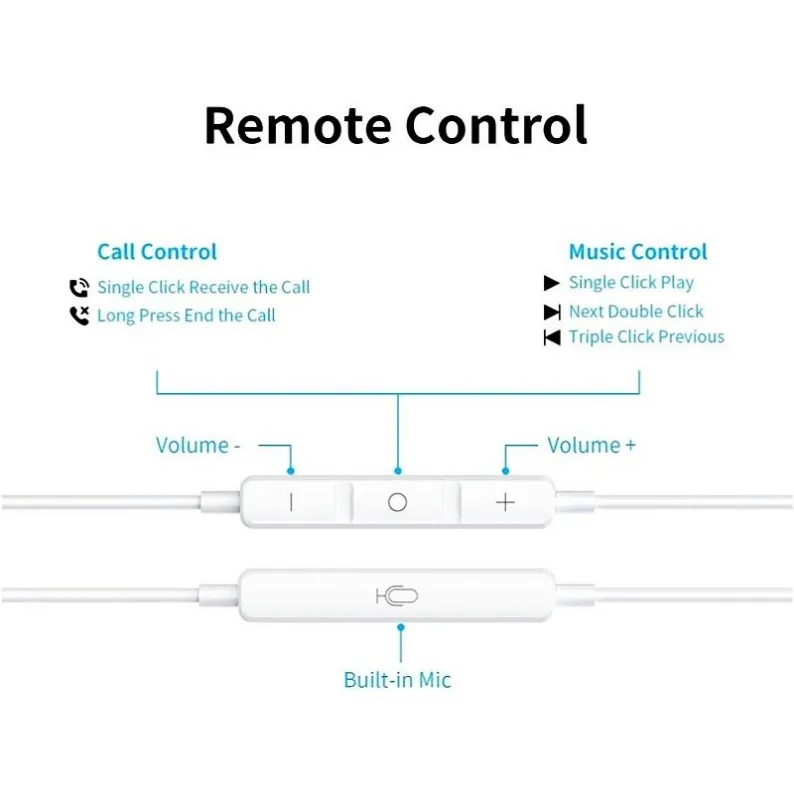
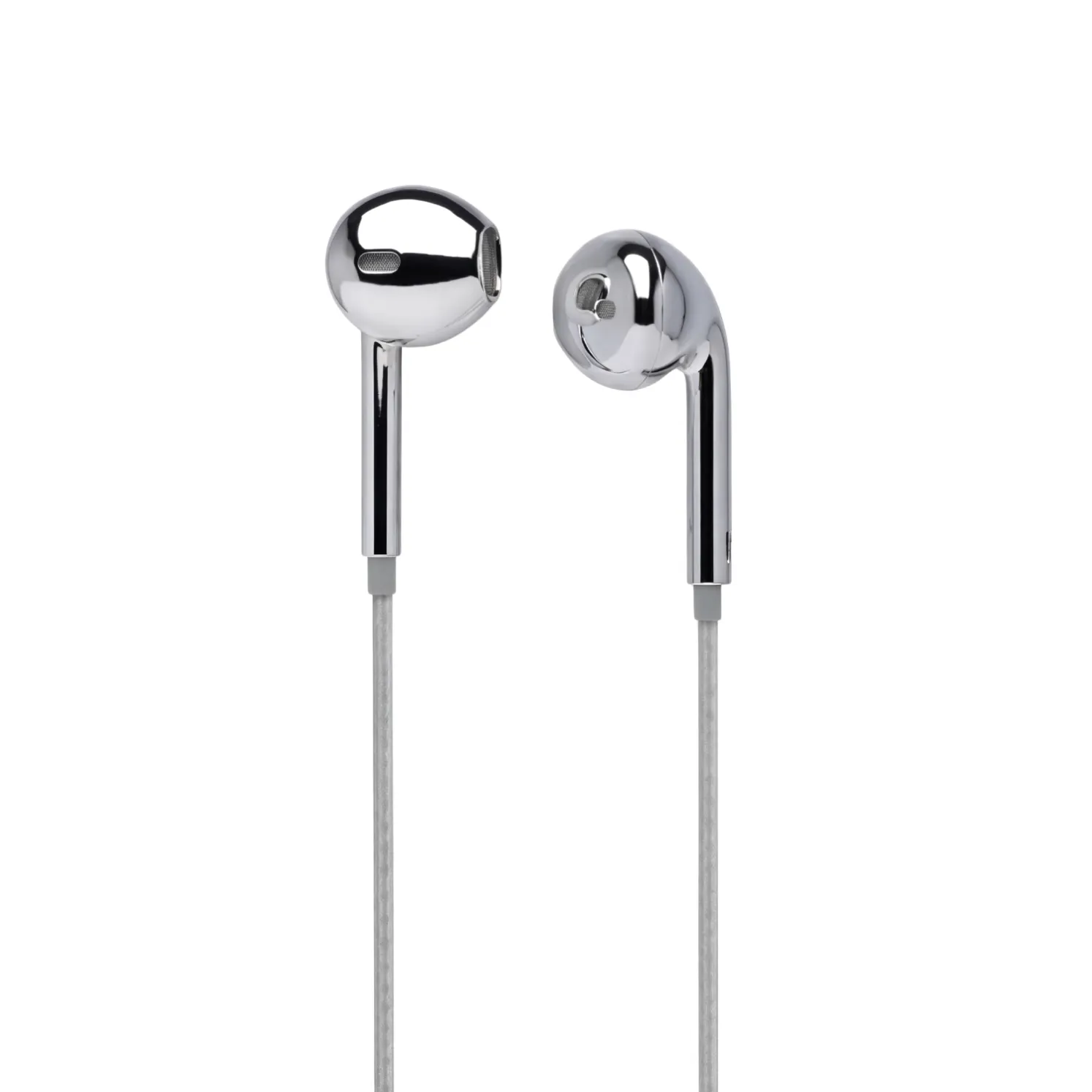
For Amazon sellers starting out, wired models are often the safer first private label product: no battery, no Bluetooth pairing, no charging case, and far fewer things that can generate a one-star review. Our EM-F4C Type-C wired earphones are the model most Amazon sellers start with, because Type-C is now the standard connector on new Android phones and the model takes a clean laser-engraved logo. If your customers are iPhone users or you want a premium metal look, our EM-142S metal wired earphones are the alternative most sellers compare it against — the metal shell takes engraving particularly well, and the finish holds up to daily use.
Whichever model you choose, state it by name in your first message. It is the one detail that lets the factory quote the right product instead of guessing.
3. Your logo method and where it goes
There are three common ways to put a logo on earphones, and they have very different minimum orders and very different durability. Choosing the method before you ask for a quote saves a full round of discussion:
- Laser engraving — the logo is burned into the shell. It is the most durable option, especially on metal earphones, and it starts from just 5 pcs with us. Best for sellers who want a premium feel and a logo that cannot rub off.
- Silk printing — ink printed onto the shell or the cable. It works on more materials and more colours, but it starts from 500 pcs and it will wear faster than engraving on a product that is handled every day.
- Custom packaging — your logo and brand on the retail box rather than on the earphone itself. This starts from 500 pcs and is often the right choice for a first Amazon order, because the box is what the customer sees in the product photo and what Amazon's warehouse handles.
If you are unsure which method suits your model, read our comparison of laser engraving vs silk printing on earbuds before you write to the factory. And always ask for a logo sample before the bulk order — our guide to getting a sample with your logo before a bulk order explains what to check on that sample, including the thumb-rub test that catches poorly cured ink in thirty seconds.
4. Your packaging specification — or the files to make it
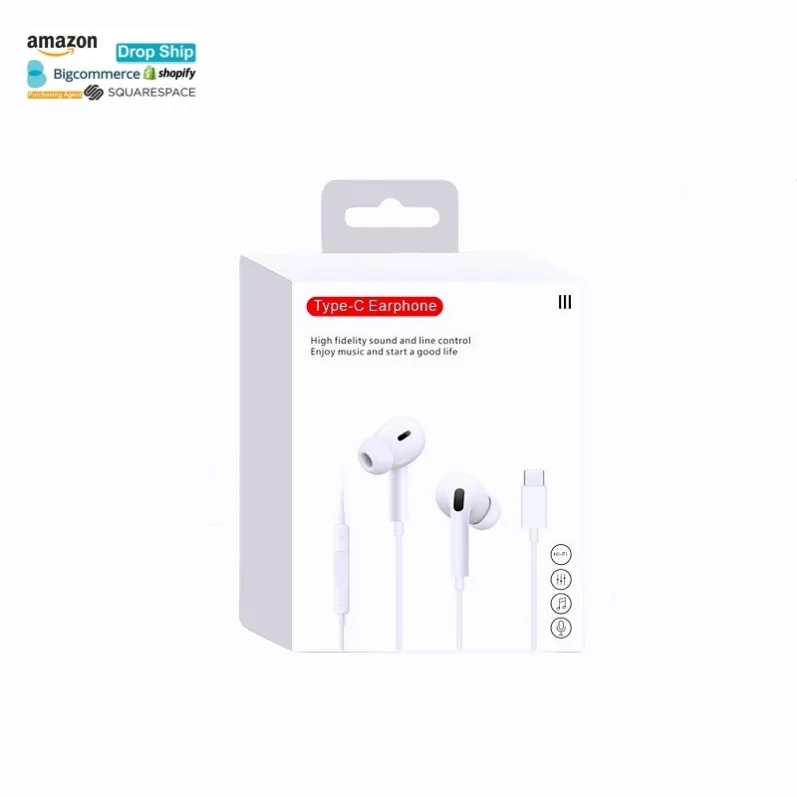
Amazon sellers fail on packaging more often than on the earphones themselves. The factory needs to know: do you want our standard retail box with your logo added, or a fully custom box designed from scratch? If custom, send the design file, the box dimensions, and the material you want — or tell the factory you need it to design the box and send you a proof to approve.
Two packaging details matter specifically for Amazon. First, the box must survive shipping and warehouse handling without crushing, because a crushed box is a returned unit and a negative review about packaging. Second, if your product ships in a poly bag, Amazon requires a suffocation warning printed on the bag for products sold in the United States. Tell the factory your destination market so it can include the right warning text from the start instead of adding it later at your expense.
If you do not have a packaging design yet, say so and ask the factory what it needs from you. Most factories, including ours, can work from a simple brief — your logo, your brand colours, the text for the back of the box — and return a proof for approval. What slows everything down is not a missing design; it is a missing answer about whether a design exists at all.
5. Your barcode and labelling plan
Every unit that goes to Amazon FBA needs a scannable barcode, and the factory needs to know which one you are using. There are two common cases:
- You use Amazon's FNSKU labels. Tell the factory you will send the FNSKU file, or ask the factory to apply labels you supply. Confirm who prints them, who applies them, and whether the factory will cover the manufacturer's barcode so Amazon scans the FNSKU first.
- You use the manufacturer's barcode. Tell the factory so it prints the right code on the box and does not cover it with anything else.
Carton labels matter too. Amazon requires specific labels on the outside of each carton, and cartons over a certain weight need a team-lift label. If the factory packs your order, it should print and apply these labels before the cartons leave. Ask about it in your first message — "please apply FBA carton labels" is one sentence that can save you a prep-centre fee on every shipment.
6. Your quantity and your launch date
Give the factory two numbers: how many units you want, and the date you need them in Amazon's warehouse. Both numbers change the answer you get.
Quantity decides the logo method and the packaging, as above — a 100-unit test order cannot take silk printing or custom packaging, but it can take laser engraving, because our laser engraving starts at just 5 pcs and our standard product minimum is 1 pc. Be honest about whether this is a test order or a launch order. Factories price and schedule differently for the two, and a seller who says "100 units now, 1,000 units next month if it sells" gets a better plan than a seller who pretends the test order is a bulk order.
Your launch date decides whether the schedule works. As a guide: a logo sample takes 5–7 days, and a non-customised bulk order takes 3–7 days after the sample is approved. Custom packaging adds design and proofing time on top of that, so a custom box needs to be started before the sample, not after it. Tell the factory your Amazon launch date and your freight time, and ask it to confirm the production schedule in writing. If the dates do not fit, you want to know in the first message, not after you have paid a deposit.
7. Your destination and shipping terms
State the country the goods are going to, the delivery address type — Amazon FBA warehouse, your own warehouse, or a prep centre — and the shipping terms you want. Most first-time Amazon sellers ask for DDP delivery to the FBA warehouse, because the factory or its forwarder handles customs and duty and the goods arrive ready to be received. If you prefer FOB Shenzhen and your own forwarder, say so. Either way, the factory cannot quote freight without a destination, and a quote without freight is not a quote you can plan a launch around.
For a full checklist of what to put in a first inquiry, our guide on what to include in an RFQ to get an accurate earphone quote in 24 hours covers the same ground in RFQ form — use it as a template for your first message.
What a Good First Message Looks Like
Put the seven answers together and your first inquiry can be short. Something like this is enough:
"Hi, I sell on Amazon US. I would like a quote for 500 pcs of your EM-F4C Type-C earphones with my logo laser-engraved on the earphone shell. My logo file is attached. I need a custom retail box — I will send the design file this week. Please apply FNSKU labels and FBA carton labels. Delivery DDP to an Amazon FBA warehouse in California. My target launch date is six weeks from now. Please send a logo sample first."
A factory can answer that message with a real quote and a sample plan the same day. Compare that with "I want private label earphones for Amazon, please quote" — a message that cannot be answered at all until the factory asks you six questions back.
4 Mistakes That Delay Amazon Launches
Ordering the sample on the wrong model. A logo sample proves the logo on one model only. If you test the logo on a plastic shell and then order a metal model, the sample tells you nothing. Test on the exact model you plan to sell.
Sending a low-resolution logo. A screenshot of your logo from your Amazon storefront is not a print file. Send the vector file, and check the sample against the original artwork, not against your memory of it.
Leaving packaging until after the sample. Custom packaging has the longest lead time in a private label order. Start it with the sample, not after it, or your earphones will sit finished in the factory while the boxes are still being designed.
Assuming the factory handles FBA labels by default. Some factories do, some do not, and some charge for it. Ask in the first message. One sentence in the inquiry is cheaper than relabelling a thousand units yourself.
How We Work with Amazon Sellers
We work with Amazon sellers at every stage, from a first 5-piece laser-engraved sample to repeat bulk orders. Our standard product minimum is 1 pc, laser engraving starts at 5 pcs, silk printing and custom packaging start at 500 pcs, and a logo sample takes 5–7 days. Every order goes through our factory quality control process before shipment, and our OEM and ODM service page explains the full customisation process, including packaging files and logo methods.
If you are not ready for a bulk order yet, you can also test a model through our dropshipping service first — order a small quantity, sell it, and confirm the product before you commit to a private label run. That is often the lowest-risk way to find out whether a model earns its place on your Amazon listing.
FAQ
Can I start a private label earphone order with a small quantity?
Yes. Our standard product minimum is 1 pc, and laser engraving starts at just 5 pcs, so you can order a small branded test batch before committing to a larger run. Silk printing and custom packaging start at 500 pcs.
Do I need a trademark before I order private label earphones?
No, but tell the factory your trademark status. A pending trademark is fine for production; the factory only needs to know so it can advise you on what can be printed and what Amazon will require for Brand Registry.
How long does it take from first message to delivery?
A logo sample takes 5–7 days. Once you approve the sample, a non-customised bulk order takes 3–7 days. Custom packaging adds design and proofing time, so start the packaging design at the same time as the sample.
Will the factory apply my FNSKU and FBA carton labels?
Ask for it in your first inquiry. We can apply FNSKU labels and FBA carton labels before shipment so your goods arrive ready for Amazon receiving, but this has to be agreed before packing, not after.
Can I get a sample with my logo before I place a bulk order?
Yes — and you should. A logo sample is the cheapest way to check the logo quality, the placement and the packaging before you commit to a bulk order. See our guide to getting a sample with your logo before a bulk order for the full checklist.
Get Your Amazon Private Label Quote
If you are planning a private label earphone line for Amazon, send us your brief — the model, your logo file, your packaging plan and your target launch date — and we will come back with an accurate quote and a sample plan. Get a Quote or message us on WhatsApp at +86 135 3021 9863. A complete brief gets you a same-day answer; a one-line inquiry gets you a list of questions back.