Can I Get a Sample with My Logo Before a Bulk Order? A Buyer's Guide for Earphone Orders
Yes — a reputable earphone factory should send a physical sample with your logo before bulk production, and this guide explains what the sample must prove, what artwork to send, and how long it takes.
You have your logo. You have picked an earphone model. The factory has quoted you. And now the question that stops most first-time private-label buyers in their tracks: can I get a sample with my logo on it before I commit to a bulk order?
The short answer is yes — any factory that does serious OEM work should be able to do this, and you should treat a refusal as a warning sign. The longer answer is that "a sample with my logo" can mean three different things, they cost different amounts of time, and only one of them actually protects you. This guide explains the difference, what a good logo sample should prove, what to send the factory, and how to turn an approved sample into a bulk order without surprises.
1. Why the Logo Sample Is the Most Important Sample You Will Order
Most buyers think of a product sample as a sound check. They listen to the earphones, test the cable, check the fit — and then approve the order. The logo rarely gets the same attention, and that is exactly where first orders go wrong.
A logo is not a picture on a screen. On a physical earphone it has a size, a position, a depth and a colour that only exist once it is made. A digital mockup cannot tell you whether your logo is readable at 8 millimetres wide, whether the fine lines in your lettering survive laser engraving, whether the ink colour you chose matches your brand on black plastic, or whether the logo sits where the customer's thumb rubs it every day. Every one of those problems is invisible until the logo is on the real product — and invisible problems are the ones that ship in a bulk order.
There is also a commercial reason. Your logo is the part of the product your customer sees every single day. The sound quality is experienced once; the logo is seen every time the earbuds come out of a pocket. A logo that is crooked, blurry or already wearing off tells the end customer the whole product is cheap, even when the sound is fine. Checking the logo on a physical sample is the cheapest brand insurance a private-label buyer can buy.
2. Three Things "a Sample with My Logo" Can Mean
When you ask a factory for a logo sample, be precise about which of these three you mean. Factories use the same words for all of them, and the difference matters.
A digital proof. The factory places your logo artwork onto a product photo or a 3D rendering and sends it back for approval. This is fast — often within a day — and it is a useful first step. It confirms placement, size and colour direction. But it proves nothing about the real result. A rendering cannot show how ink behaves on a curved shell or how a laser mark looks on your exact material. Treat a digital proof as a design check, never as a production approval.
A blank product sample. The factory sends you the earphone model without any logo. This proves the product itself: sound, fit, cable, packaging, build quality. It is the right sample to order when you are still choosing between models. It proves nothing about your logo.
A physical logo sample. The factory applies your actual logo to the actual product, using the actual method — laser engraving, silk printing or pad printing — and ships it to you. This is the only sample that answers the real question: what will my brand look like on this product in my customer's hands? It takes longer than a digital proof, because the factory has to set up the real marking process, but it is the only version that de-risks a bulk order.
A good factory will offer all three in sequence: digital proof first, then a physical logo sample, then bulk production. If a factory offers only a digital proof and pushes you straight to bulk, ask why.
3. What Your Logo Sample Should Prove: A Five-Point Checklist
When the physical sample arrives, do not just look at it and feel good. Check it against these five points, and photograph each one before you approve anything.
Placement. Is the logo exactly where you agreed — centred on the faceplate, on the charging case lid, on the cable plug? Hold the earphone the way a customer would hold it. A logo that is technically centred on the shell but reads upside down when the earbud sits in the ear is a placement failure. Check both earbuds, not just one: a logo can be perfect on the left unit and off-centre on the right.
Size and readability. Read the logo at arm's length, in normal room light. Can you read every letter? Do the thin lines in your artwork survive at this size, or do they blur into each other? This is the most common failure in logo samples, because artwork that looks crisp on a computer screen often loses its fine detail when it is shrunk to fit an earbud shell. If the small text is unreadable, ask the factory to simplify the artwork or enlarge the logo area — do not approve it hoping the bulk batch will somehow be sharper.
Colour. Compare the logo colour on the sample with your brand colour under daylight, not just under office lighting. Printed ink shifts with the base colour of the product: the same ink looks different on a black shell, a white shell and a metal shell. If your brand depends on an exact colour, tell the factory the colour reference before the sample is made, and check the sample against that reference — not against the digital proof, which is a screen rendering.
Method match. Confirm the logo was made with the method you chose. Laser engraving should feel like part of the material, with no ink layer to catch a fingernail. Silk printing should have even ink coverage with no thin spots at the edges. If you are unsure which method suits your model, our comparison of laser engraving vs silk printing on earbuds explains how each one wears and which materials each one suits. The sample is your chance to verify the method on your exact product, not in theory.
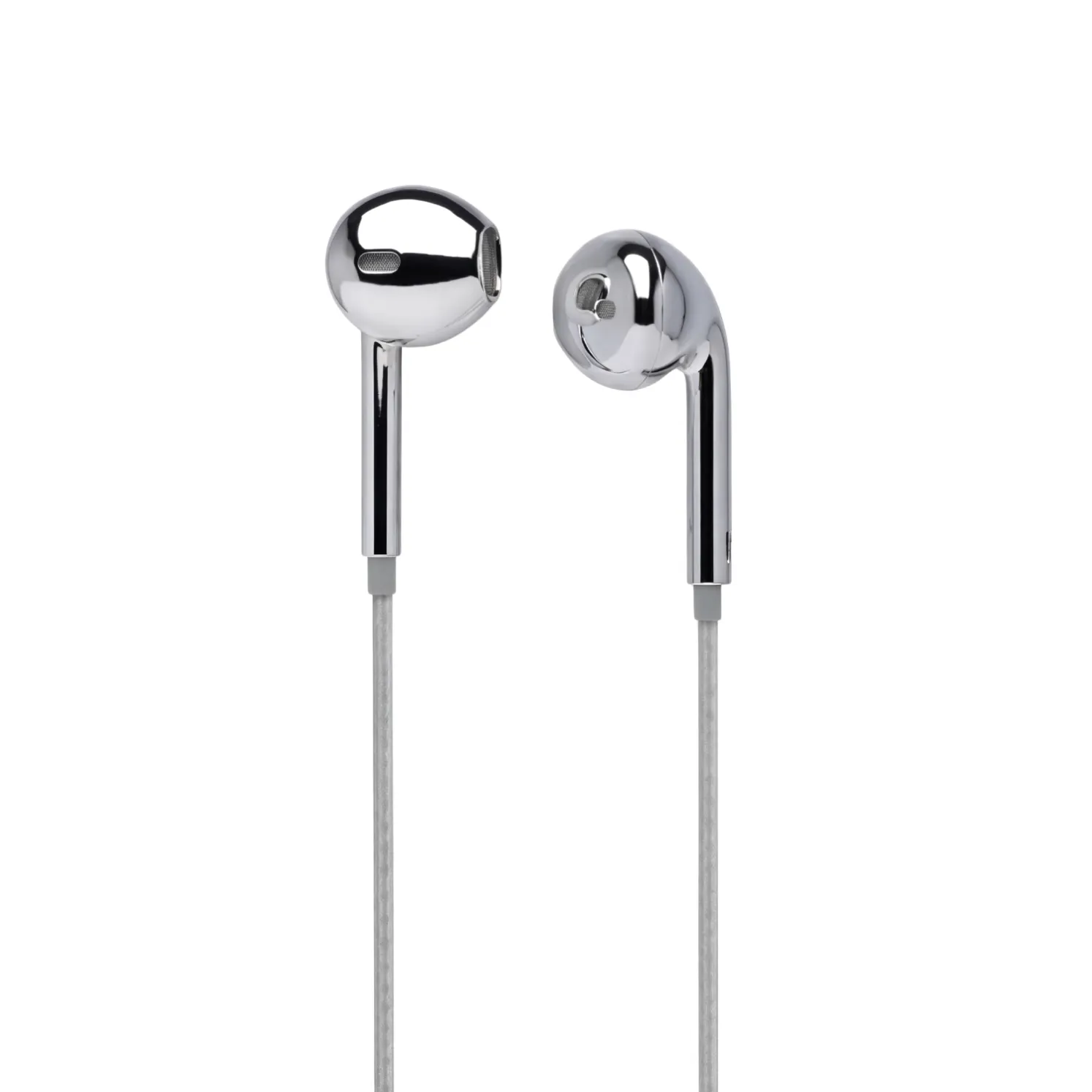
Durability. Rub the logo firmly with your thumb for thirty seconds, then with a slightly damp cloth. A good logo sample should show no change. This is a rough test, not a laboratory test, but it catches the worst failures — ink that was not cured properly, or engraving that is too shallow — before they become a thousand-unit problem. Our EM-142S metal wired earphones take a laser-engraved logo particularly well, because the mark is burned into the metal shell itself rather than sitting on the surface, which is one reason to test the logo on the exact model you plan to order.
4. What to Send the Factory So the Sample Comes Back Right
Most logo samples fail because of the artwork file, not the factory. Send the factory these four things, and say them in writing.
A vector logo file. Send AI, EPS, PDF or SVG — a true vector file, not a JPG or PNG saved at a larger size. A vector file scales to any size without losing detail, which is what the factory's engraving or printing equipment needs. If you only have a PNG, send the largest version you have and tell the factory; a good factory will tell you honestly whether it is good enough, and will ask for a redraw rather than guessing.
The exact placement. Do not write "put the logo on the earphones." Write "centred on the outer faceplate of each earbud, and centred on the lid of the charging case" — or wherever you want it. If you have a reference photo of another product with the placement you like, send it. Placement is the single most common source of sample rework, and it is almost always caused by a vague instruction.
The colour reference. For printed logos, give a Pantone number or a physical colour swatch reference, not a screen colour. Screens lie about colour; a Pantone number does not. For laser engraving, colour does not apply — the mark is a single tone — so confirm that you understand this before the sample is made, rather than being surprised when it arrives without colour.
The model and the method. Name the exact earphone model and the logo method you want tested. A logo sample made by laser engraving on a metal shell proves nothing about how the same logo would print on a plastic EM-F4C Type-C model. If you plan to order two models with the same logo, say so — the factory may need to make two samples, and it is far better to know that now than after the bulk order.
5. How Long Does a Logo Sample Take — and What Happens to the Fee?
At HOEXI, standard samples ship in 5–7 days, and a logo sample follows the same timeline once the artwork is confirmed: a day or two for the digital proof, then the physical sample is produced and shipped. Factories that quote much longer for a simple logo sample are usually fitting your sample around larger production runs; factories that promise it overnight are usually sending you a digital proof and calling it a sample.
On fees, the honest industry pattern is this: a plain product sample is often charged at the product cost plus shipping, and that fee is usually credited against your bulk order when you proceed. A custom logo sample can cost more, because the factory has to set up the marking process for a single unit — the same setup work as a production run, done once for one piece. Ask the factory two questions before you pay: is the sample fee credited against the bulk order, and is a second sample charged again if the first one needs a revision? Get both answers in writing. A factory that credits the sample fee is a factory that expects you to come back with a bulk order; a factory that charges full setup for every revision is a factory you will pay for its learning curve.
Two numbers worth knowing before you negotiate: at HOEXI, laser engraving starts from just 5 pieces, while silk printing starts from 500 pieces and custom packaging from 500 pieces. That matters for samples, because a 5-piece engraved run is a realistic way to test your logo on real products with real customers before you scale — while a 500-piece printed run is already a bulk commitment. Many factories set custom-logo minimums at 500 to 1,000 pieces for any method, which is why a logo sample matters so much more when the minimum is high: the higher the minimum, the more expensive a logo mistake becomes. Read the full picture on our OEM and private-label service page.
6. Red Flags: When a Factory's Sample Policy Tells You to Walk Away
A factory's sample policy is a preview of how it will behave on your bulk order. Watch for these four signs.
No sample at all. "We don't do samples, just order" is not a policy; it is a refusal to be checked. A factory confident in its product wants you to see it before you buy hundreds of units.
A sample that is not the real product. If the sample arrives as a different model, a different colour, or a visibly hand-finished one-off that could not come off a production line, the bulk order will not match it either. Insist on a sample made by the normal production process, on the normal materials.
A digital proof presented as a physical sample. If the factory sends a rendering and calls the sample "approved," you have approved nothing. Insist on holding the product in your hand before the bulk order is confirmed.
No written record of what was approved. The approved sample should become the reference for the whole order — the sealed sample, or "golden sample," that the bulk production is checked against. If the factory will not confirm in writing that bulk production must match the approved logo sample, your sample approval is worthless, because there is nothing to hold the factory to. Our pre-shipment inspection checklist for earbuds explains how that reference sample is used at the final inspection stage, and why buyers who skip this step are the ones who discover the difference only when the shipment arrives.
7. From Approved Sample to Bulk Order
Once the logo sample passes your five-point check, the path to a bulk order is short. Confirm the approval in writing, referencing the sample by date and the exact artwork version, and ask the factory to keep one sealed unit as the production reference. At HOEXI, standard products carry a minimum order of just 1 piece, non-custom bulk orders ship in 3–7 days, and bulk orders run on a 30% deposit with the balance before shipment. Your approved sample becomes the standard the bulk batch is measured against — same placement, same size, same colour, same method — and the pre-shipment inspection checks the batch against it, not against a memory of what was agreed. It is the same discipline behind our 4.9/5 store rating: the sample you approve is the standard every batch is held to.
That is the whole point of a logo sample. It turns a leap of faith into a checklist: the logo you approved is the logo your customers receive, and if it is not, you have a physical reference that proves it. A factory that welcomes that process is a factory you can build a brand on.
Frequently Asked Questions
Can I get a sample with my logo before a bulk order?
Yes. A reputable earphone factory should offer a physical logo sample — your artwork applied to the real product by the real method — before you commit to bulk. At HOEXI, standard samples ship in 5–7 days once artwork is confirmed, and laser engraving starts from just 5 pieces.
Is a digital proof enough to approve a bulk order?
No. A digital proof confirms placement, size and colour direction, but it cannot show how ink or engraving behaves on the real material. Approve the design on a proof, then approve production on a physical sample.
What file should I send for my logo?
A vector file — AI, EPS, PDF or SVG. If you only have a PNG, send the largest version available and ask the factory whether it is good enough before the sample is made.
Does the sample fee come back if I place a bulk order?
It usually should. At HOEXI, the standard sample fee is credited against your bulk order when you proceed. Ask any factory to confirm this in writing before you pay for a custom logo sample, and ask whether a revised sample is charged again.
What if the logo sample is wrong?
Tell the factory exactly what is wrong — placement, size, colour, method — and ask for a revised sample. One revision is normal; repeated failures on the same point are a sign to reconsider the factory, not the artwork.
Ready to see your logo on a real product? Send us your artwork and the model you have in mind, and we will confirm the digital proof and the physical sample timeline for your order. Get a Quote or message us on WhatsApp at +86 135 3021 9863 — we reply within 24 hours.